June Meeting Recap: Stomach, Guts and Stuff!

June’s meeting of the Ladder was all about the gastrointestinal system (<– that’s just the fancy name for everything that’s part of our digestive systems, including the stomach and guts). Talking about the digestive system can make us giggle or gross out or squirm – we all know that everything that goes into our digestive system has to come out, and that the whole process includes a lot of oozing and glopping and gurgling when everything IS working right, let alone the less-than-awesome things that can happen when something throws our digestive system out of whack.
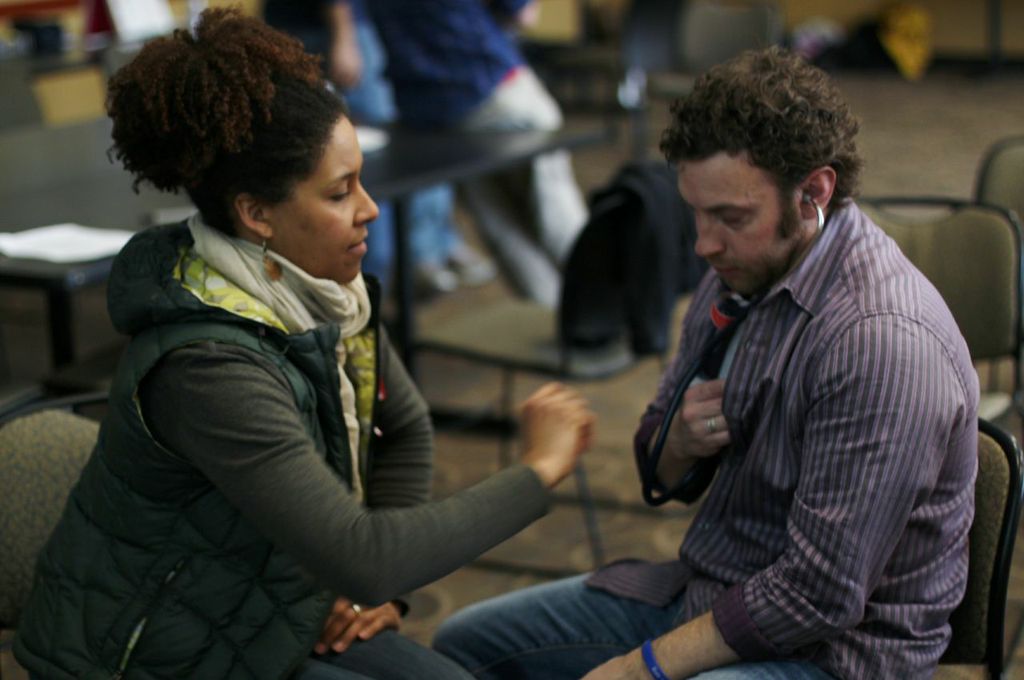
Listening to gurgles

Medical Scholar Christopher listening to the gurgles and squeaks made by the intestines.

Gastroenterologists are the doctors who know a lot about and work specifically on our digestive systems. Seems a good bet that gastroenterologists have a pretty good sense of humor given it’s their job to deal with everything – the good, the bad, and the ugly! – about our digestive systems.

At our meeting, Medical Scholars made model stomachs to illustrate how chewing and swallowing plus the stomach adding acid and churning up the whole mix helps break down a wad of food into glop that the small intestines can slurp nutrients from:

“Stomachs” churnin.’

Medical Scholars Yael and Cora then demonstrated with nylon stockings and a soupy mix of something that looked like runny oatmeal how the large intestines squeeze and wring out the goop leftover after that the small intestines are done getting all the good stuff out. The large intestines remove lots of the water from the sludge and slurp the water back into your body tissues, while what’s left after that is headed out the back door as, you guessed it, poop (or “stool” or “fecal matter” as you’ll hear doctors and nurses call it. Don’t ask us how it got to be called “stool” – doesn’t make sense to us either!).
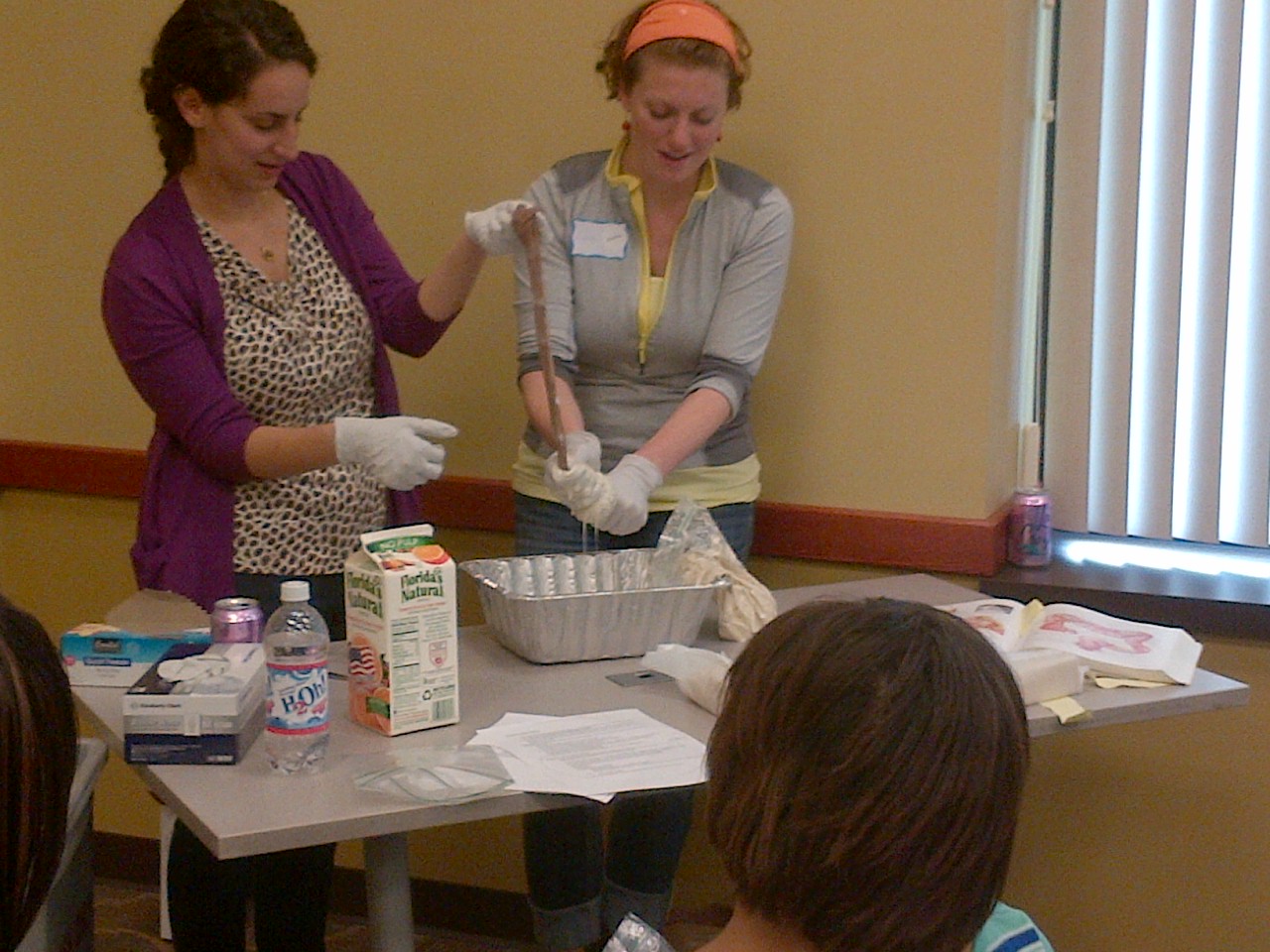
Making “poop.”

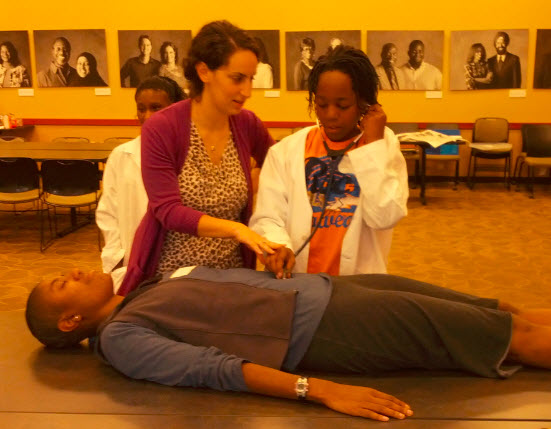
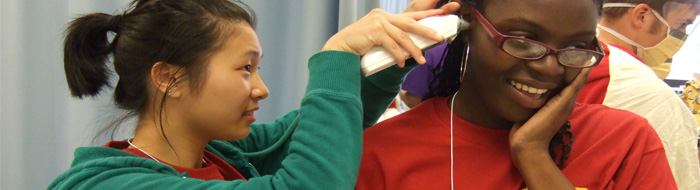
Medical Scholars also learned about some procedures for listening to a patient’s insides, including simple things like”percussing” where you can get a lot of info from the sound made by tapping a patient’s abdomen in a certain way:

Percussing a patient's abdomen.

Percussing a patient’s abdomen.

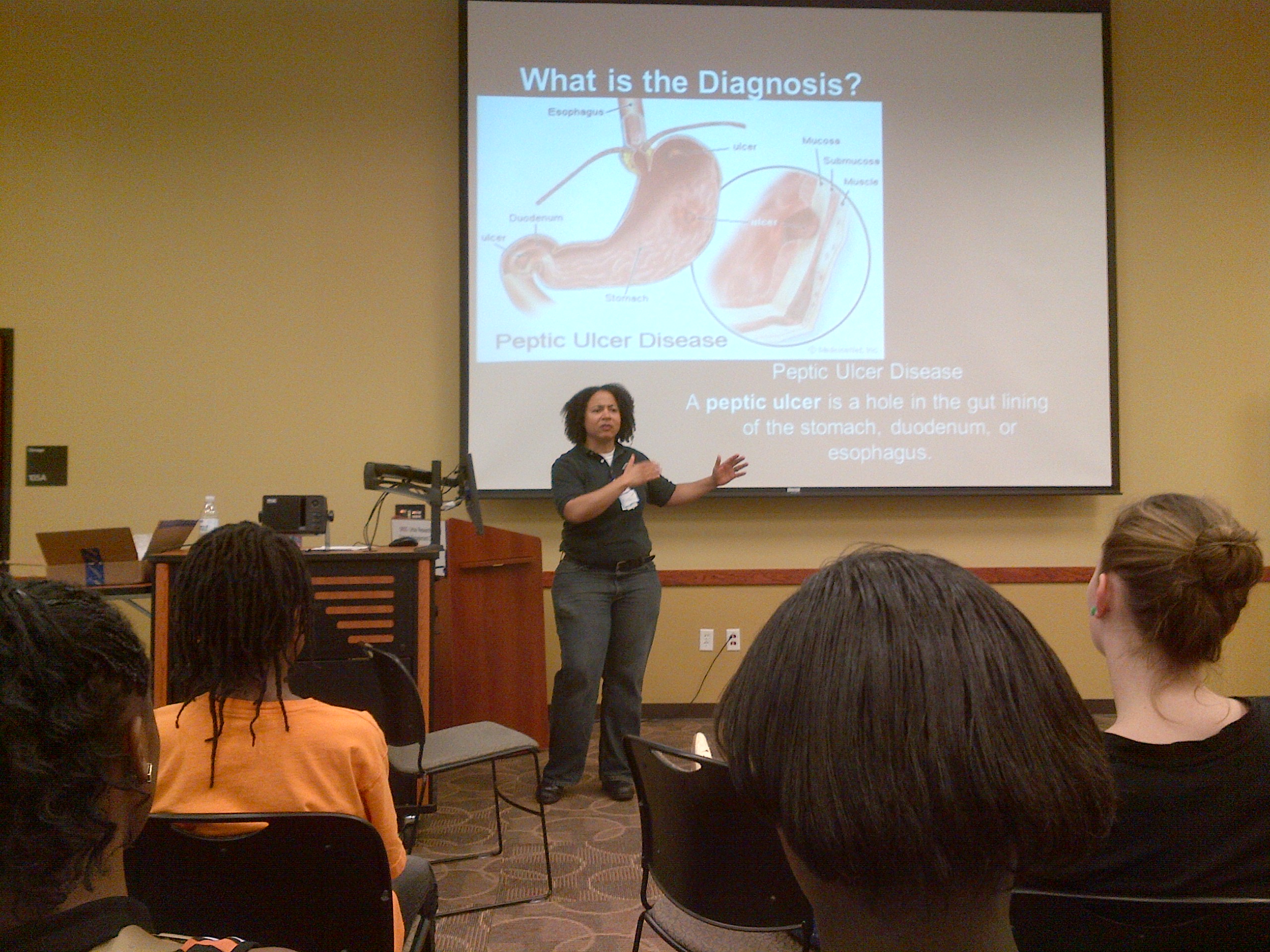
Medical Scholar Renee taught us about things like ulcers, appendicitis and different kinds of cancer that can cause serious trouble for our digestive systems, and how there are many different health care professionals (any of which you could choose to be!) who help with different parts of you getting fixed, healed and recovered when something serious is wrong with your digestive system:

"What's the diagnosis?"

“What’s the diagnosis?”

The Ladder is a Society of Medical Scholars ages 9 to 99, and meetings are the second Saturday of every month and open to anyone and everyone. You’ll have a lot of fun, get a free lunch, and probably even learn something in the process. The next meeting is July 13th at the  UROC building (2001 Plymouth Ave N) in North Minneapolis!

“Lift as you Climb, Build as you Grow”

Posted in about the Ladder, meeting recaps | Tagged , , , , , , | Leave a comment

Next Ladder Meeting: Fun with the Stomach, Guts & Stuff!

Ever wondered what happens after you gulp down a bowl of cereal, gnaw a slice of pizza, or crunch on an apple?

tumblr_mi34d40xJR1rd0rbzo1_500How does your body turn the food you put in your mouth into stuff it can actually use? The magic (ok not really magic, but the really cool and kind of amazing transformation) happens through the function of your gastrointestinal (GI) system, which includes your stomach and guts.

At our next meeting of the Ladder (coming up fast – already next Saturday June 8th!) we’ll learn about how our GI systems work, how healthcare professionals (like docs, nurses, specialists) can help us keep our GI systems healthy, and how those folks can help us when our GI systems get outta whack.

So bring your GI system and a friend and join us for lunch (provided!) and learning at the next meeting of the Ladder Saturday June 8th at 12:30pm at the  UROC building (2001 Plymouth Ave N, Minneapolis). The UROC building is reachable by Metro Transit bus routes 19, 32 & 7.

“Lift as you Climb, Build as you Grow”

Posted in upcoming meetings | Tagged , , , , , , | Leave a comment

May Meeting Recap: Brains, Nerves & Reflexes

Medical scholars at May’s meeting of the Ladder got the chance to learn all about the brain, nerves and reflexes: how you use them for something as simple as clapping, testing how fast your nerves let your brain talk to your muscles, and how doctors can look inside your brain for problems without actually cracking your skull open.

diagnosis2We learned how a stroke should maybe be called a “brain attack” because it’s a lot like a heart attack but in the brain. Some of the advanced medical scholars used an app to show us how strokes in different parts of the brain impact different kinds of function.

brainFunctionAppFor example, we learned that if you have a stroke that affects the very front-most part of your brain (the pre-frontal cortex), the green part on the screen above, you would likely experience some sort of changes to or problems with your emotions, decision making or personality. We learned about this guy Phineas Gage who back in 1848 had an iron rod blasted through this area of the brain and somehow survived but was a little weird after that.

We learned about the different signs that can tell you that someone is having a stroke. Here, Medical Scholar Ashawna demonstrates how a doctor would try to figure out if someone is showing signs of a stroke:

strokeCheckWe learned the acronym F.A.S.T. as a simple way to remember what to do if we think someone might be having a stroke:

F = Face: look at their face – check to see if one side of their face is drooping or numb
A = Arms: check their arms – is one arm weak or numb? Have them hold out their arms, does one arm drop?
S = Speech: check their speech – are they slurring words, having a hard time talking, or hard to understand?
T = Time: time to call 911, and when you do, check the time on your watch or phone to let the medical folks know when the symptoms started

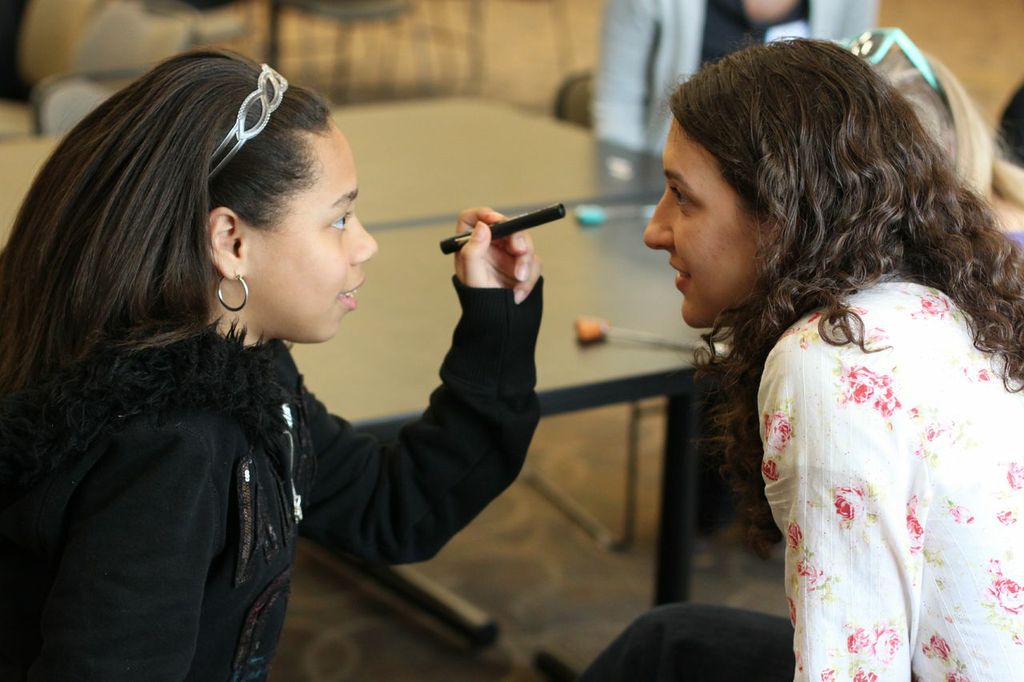
Another way of checking for signs of a stroke is to test pupil response to a bright light (the pupil is the black hole in the middle of the colored part of your eyes), as demonstrated by these Medical Scholars:

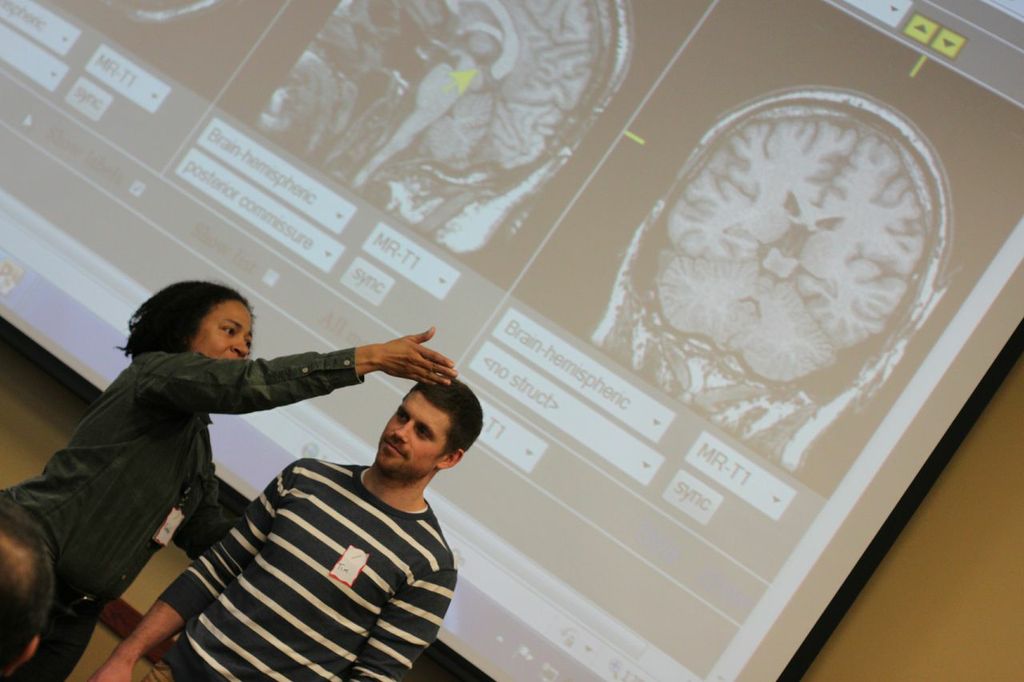
strokeTestWe also learned that certain medical scans can be really helpful in telling doctors if there are infections, tumors, strokes or other damage to parts of the brain. Here, Medical Scholar Renee uses Medical Scholar Tim as a model to show the different views that MRI (magnetic resonance imaging) scans can give doctors of what’s going on inside our brains:

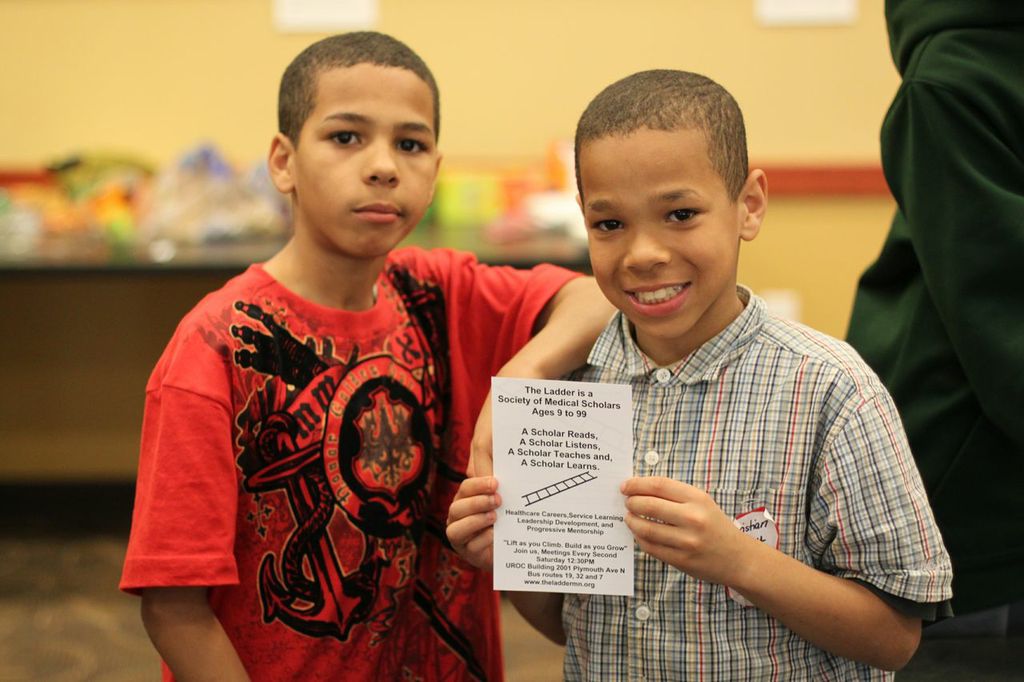
brainScans2Medical scholars Steven and Christian want you to know that the Ladder is a Society of Medical Scholars ages 9 to 99, and that meetings are every second Saturday of the month (next one is June 8, and there’s always lunch served!) at the  UROC building (2001 Plymouth Ave N) in North Minneapolis, and that you should totally come next time:

medicalScholarsThe UROC building is reachable by Metro Transit bus routes 19, 32 & 7.

“Lift as you Climb, Build as you Grow”

Posted in about the Ladder, meeting recaps | Tagged , , , , , , | Leave a comment

Next Ladder Meeting: Fun with Brains, Nerves and Reflexes!

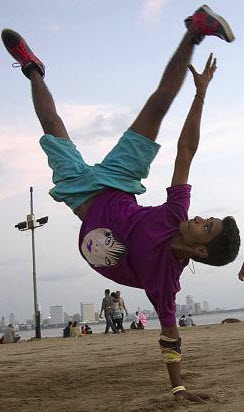
So you’ve got sweet moves. How do you make those happen?

breakdanceGirl2 breakdanceBoy2

Do you have to think through each and every motion, how every single muscle in your arms and legs will twitch and tug when they need to so you don’t fall on your face? No, course not – if you had to use all your brain space even just walking across the room or getting up from a chair, your brain wouldn’t have much time for really anything else at all.

So how does that work – how do you walk or bike or dance or jump when your friend sneaks up and scares you? And how do you do all that while still thinking about the movie you’re catching this weekend or the homework you haven’t gotten done yet or omg why isn’t school out yet? It’s all thanks to your brain, nerves and reflexes, and how they work together, often in ways so subtle you don’t even notice.

So bring your brain (and a friend!) and join us for the next Ladder meeting on May 11th for Fun with Brains, Nerves and Reflexes! We’ll learn from some of our Medical Scholars how the nervous system works and ways of checking the function (and sometimes dysfunction) of our brains, nerves and reflexes!

See you at the  UROC building (2001 Plymouth Ave N, Minneapolis) on Saturday May 11th at 12:30pm (lunch will be provided!). The UROC building is reachable by Metro Transit bus routes 19, 32 & 7.

“Lift as you Climb, Build as you Grow”

Posted in upcoming meetings | Tagged , , , , , | Leave a comment

April Meeting was Awesome!

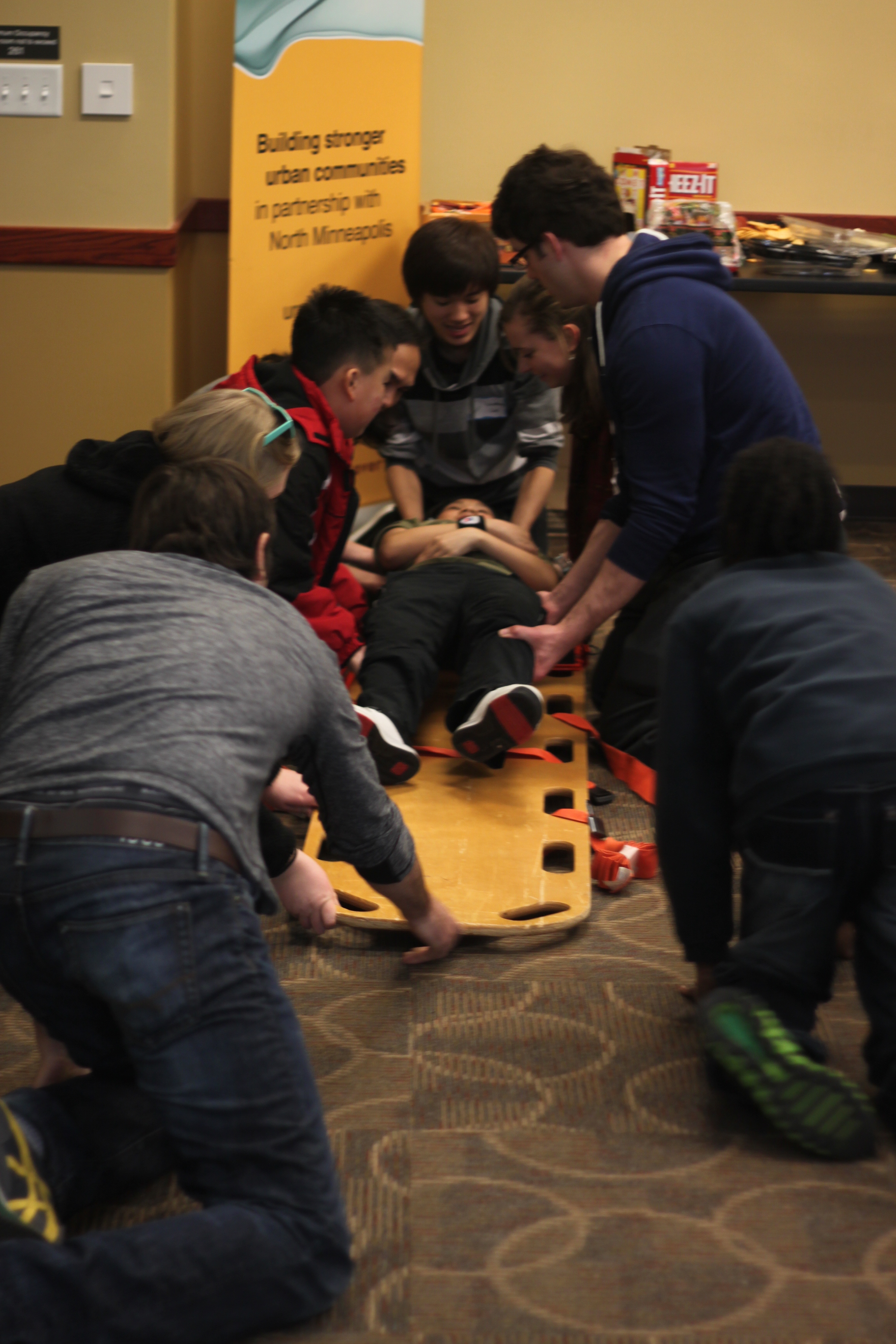
Great job to all who attended and contributed to The Ladder this weekend. Special thanks to Medical Scholar Dave Olson and the Sports Medicine Crew!
IMG_9966
We had another great turn out and lots of fun and learning all over the place.
IMG_9979Thanks again to all of Y’all for making The Ladder possible.
groupPhoto2 crop
I am proud of you guys.

IMG_9997
See you on the next Second Saturday! May 11th, 2013.
So bring a friend and join us for the next Ladder meeting (lunch will be provided!) on Saturday May 11th at 12:30pm at the UROC building (2001 Plymouth Ave N, Minneapolis). The UROC building is reachable by Metro Transit bus routes 19, 32 & 7.
“Lift as you Climb, Build as you Grow”
Posted in meeting recaps, upcoming meetings | Tagged , , , , , , , , | Leave a comment

This Saturday! April 13th: Sports Medicine with David Olson, M.D.

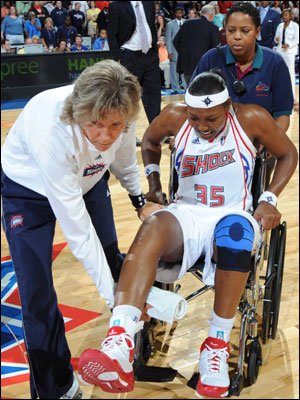
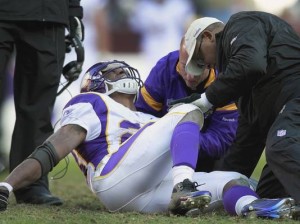
You might already think that being a physician would be one of the coolest gigs on earth. But what if you could be a sports doc for pro football, basketball, hockey or baseball teams?

ford_300_080723

photo credit: wnba.com

adrian-peterson-12-07-12-4_3_r536_c534-300x224

photo credit: allamericanorthopedic.com

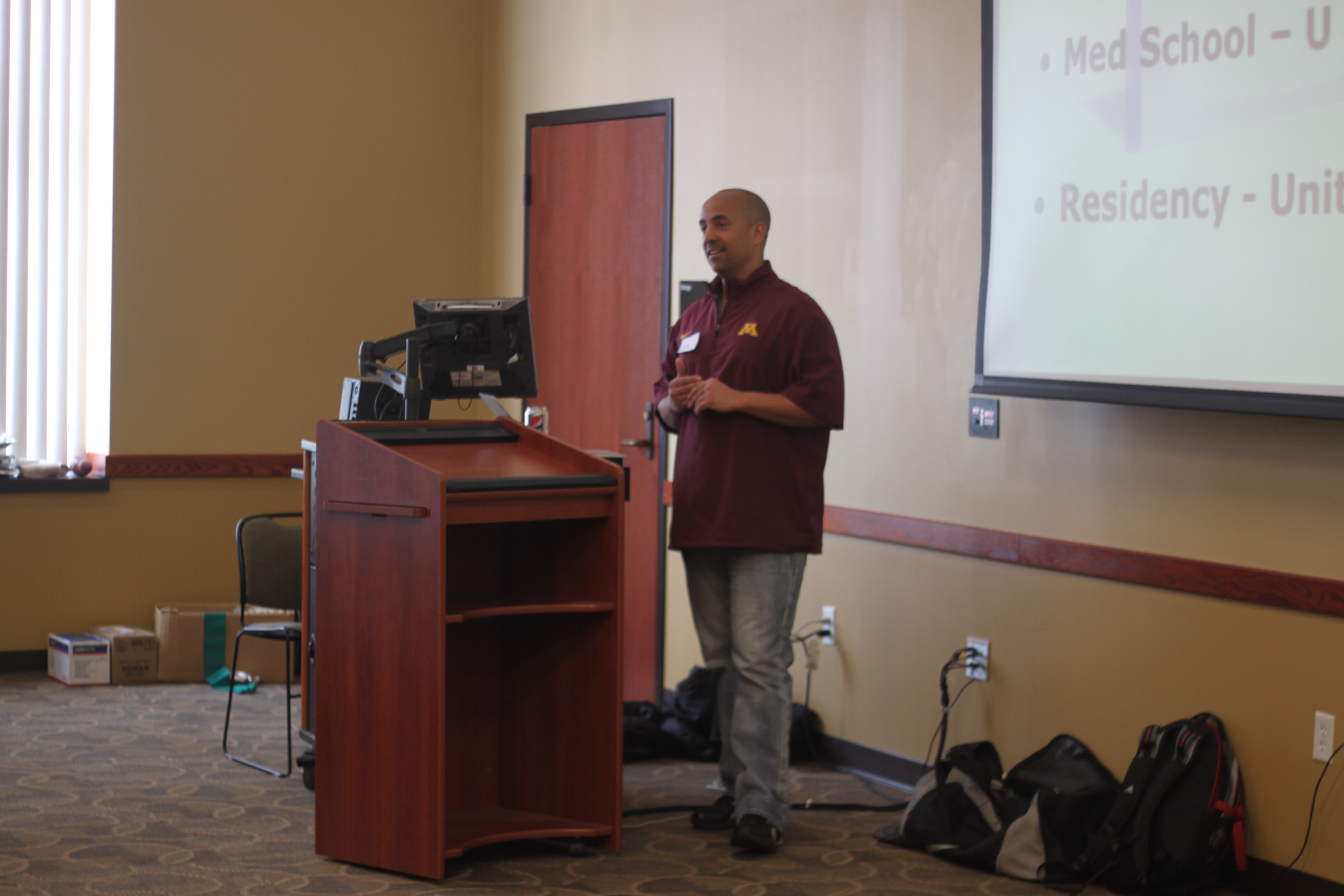
Join us at the next Ladder meeting on April 13th for “Sports Medicine: Muscle and Bones” where you’ll not only learn some things about the human musculoskeletal system, but you’ll have the opportunity to meet and hear from David Olson, M.D.  a sports medicine physician for the Minnesota Vikings and various University of Minnesota teams:

Dr. David Olson

Dr. David Olson

Dr. Olson will talk about what sports medicine has to do with muscles and bones, his love of sports as both a participant and spectator, what life as a sports medicine doc is like, and what it takes to become one.

So bring a friend and join us for the next Ladder meeting (lunch will be provided!) on Saturday April 13th at 12:30pm at the UROC building (2001 Plymouth Ave N, Minneapolis). The UROC building is reachable by Metro Transit bus routes 19, 32 & 7.

Posted in upcoming meetings | Tagged , , , , , , , , | Leave a comment

March Ladder Meeting Recap – The Heart!

At March’s meeting of the Ladder, the focus was on the heart: learning different ways of listening to the heart, what a healthy heart sounds like, and how to reset a heart that’s not doing what it’s supposed to do.

Medical scholars learned how to take their own and others’ pulses – including on the wrist…

groupPulse

…and on the foot. Did you know you have pulse points on your feet?

Taking a pulse via the foot

Medical scholars learned to use stethoscopes to listen to the sound of their own hearts:

heartbeat

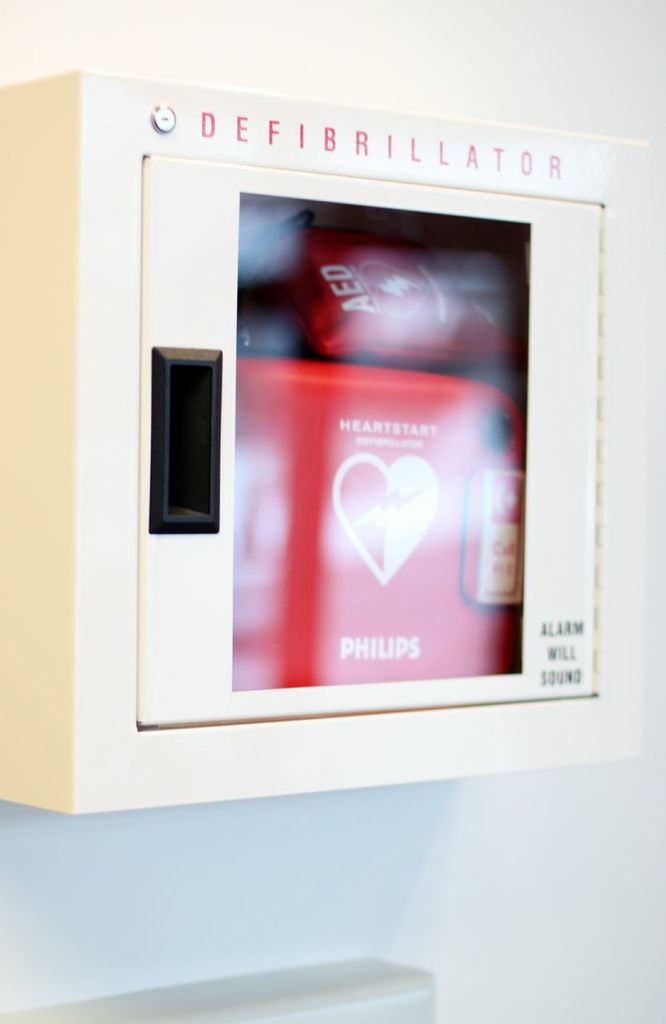
Have you ever seen one of these?

defibrillator

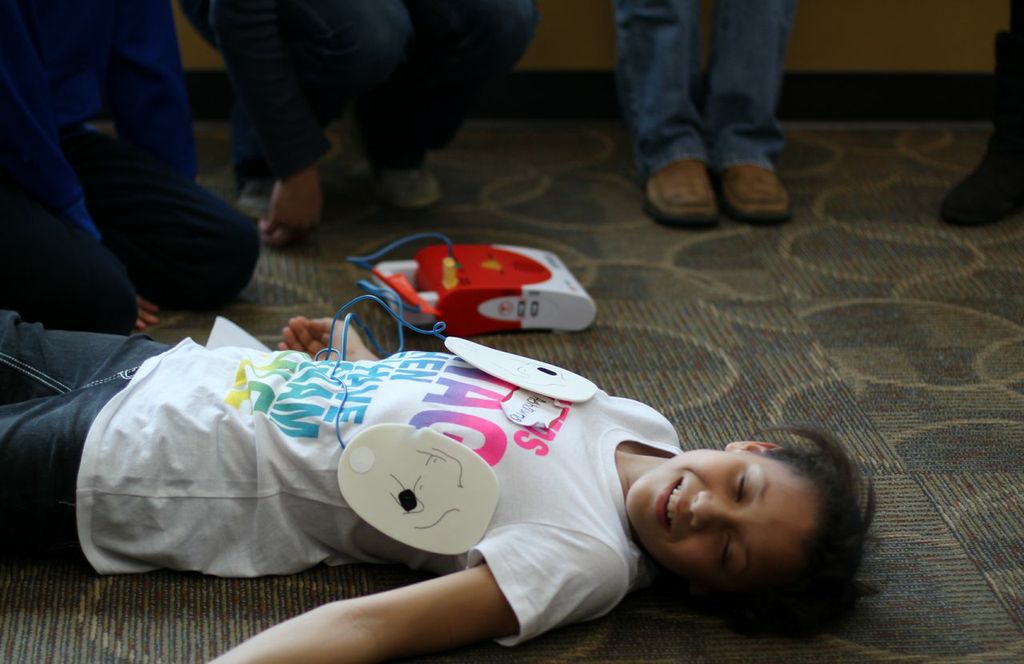
These Automated External Defibrillators (AEDs) are devices available in many public places which, simply by the application of their sensors as directed, can save a life by preventing heart failure. Medical scholars at the March meeting got practice in using these devices:

learningDefibrillators

Join us for the next meeting of the Ladder on April 13th at 12:30pm at the UROC building in North Minneapolis where you too can be a medical scholar, as well as meet our special guest Dr. David Olson who will join us to talk about sports medicine, muscles and bones!

A Scholar Reads,
A Scholar Listens,
A Scholar Teaches and,
A Scholar Learns.

Service Learning, Leadership Development, and Cascading Mentorship

“Lift as you Climb. Build as you Grow”
Posted in Uncategorized | Leave a comment

Video: Inside The Ladder

We keep telling you “this is what the Ladder is all about.”

Take a look at what happens at the Ladder:

Posted in about the Ladder | Tagged , | Leave a comment

Coming in April: Sports Medicine with David Olson, M.D.

You might already think that being a physician would be one of the coolest gigs on earth. But what if you could be a sports doc for pro football, basketball, hockey or baseball teams?

ford_300_080723

photo credit: wnba.com

adrian-peterson-12-07-12-4_3_r536_c534-300x224

photo credit: allamericanorthopedic.com

Join us at the next Ladder meeting on April 13th for “Sports Medicine: Muscle and Bones” where you’ll not only learn some things about the human musculoskeletal system, but you’ll have the opportunity to meet and hear from David Olson, M.D.  a sports medicine physician for the Minnesota Vikings and various University of Minnesota teams:

Dr. David Olson

Dr. David Olson

Dr. Olson will talk about what sports medicine has to do with muscles and bones, his love of sports as both a participant and spectator, what life as a sports medicine doc is like, and what it takes to become one.

So bring a friend and join us for the next Ladder meeting (lunch will be provided!) on Saturday April 13th at 12:30pm at the UROC building (2001 Plymouth Ave N, Minneapolis). The UROC building is reachable by Metro Transit bus routes 19, 32 & 7.

Posted in upcoming meetings | Tagged , , , , , | Leave a comment

“Scrubs, Gloves and Microscopes:” an Opportunity for High School Students

Are you a high school student interested in exploring your options for a career as a health care professional? Do you already know you want a career as a physical therapist, dentist, veterinarian, surgeon, physician or medical researcher and want to learn more about the path to take to get there?

ahc_content_422206
photo credit: Health Careers Center, University of Minnesota

If so, the “Scrubs, Glove and Microscopes” program at the University of Minnesota is for you! Each SGM session gives you the opportunity to learn about a different health care  profession:

Each program is about 3 – 4 hours in length. During each SGM session, you will learn from professional school students and professionals in the field, participate in a hands-on experience, and discover important next steps for pursuing the featured career

There are still a number of sessions in the 2012-2013 schedule you can register for:

schedule_new

Each SGM session is $40, and financial assistance and fee waivers are available for students in need. To register for one or more sessions, go to the Health Careers Center SGM site and following the registration instructions. You can contact the Health Careers Center directly if you have any questions about registration or financial assistance at 612-624-6767.

ahc_content_403978
photo credit: Health Careers Center, University of Minnesota

For more info and resources for high school students interested in a career in the health sciences, visit or contact the Health Careers Center at the University of Minnesota!

A Scholar Reads,
A Scholar Listens,
A Scholar Teaches and,
A Scholar Learns.

Service Learning, Leadership Development, and Progressive Mentorship

“Lift as you Climb. Build as you Grow”
Posted in Uncategorized | Tagged , , , , , | Leave a comment